Down Payments
How Much Do You Really Need for a Down Payment on a First Home in Indiana?
 Holly Brumm Furdo, REALTOR®
October 22, 2026 7 min read
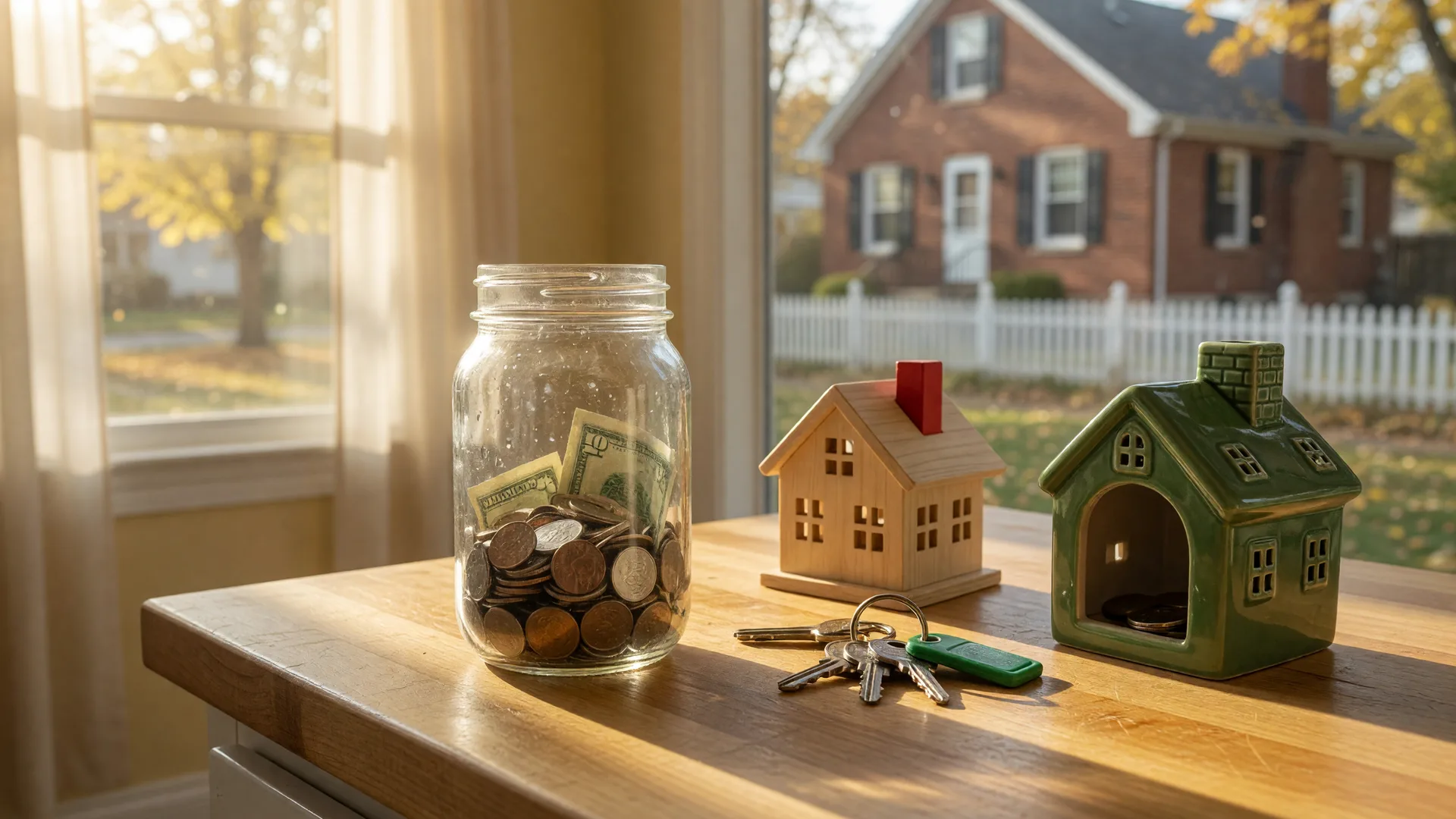
How much do you actually need for a down payment on a first home in Indiana? For most buyers the honest answer is a lot less than the 20% you keep hearing about: FHA loans can work with as little as 3.5% down, some conventional loans go as low as 3% for qualifying buyers, Indiana's IHCDA down payment assistance can cover part of the gap, and USDA and VA loans can offer zero down to eligible buyers. I'm Holly Brumm Furdo, the Northwest Indiana REALTOR® behind My First Home NWI, and debunking the 20% myth is one of my favorite conversations, because it changes buyers' whole timeline. The number that is actually true for you depends on your loan, your credit, and the town you buy in, and this post walks through the real range across Lake, Porter, and Newton Counties.
Where the 20% myth comes from
The 20% figure was never a legal requirement. It comes from the old rule of thumb that putting 20% down lets you skip mortgage insurance and tends to unlock the best interest rates. It is a nice-to-have, not a gate, and treating it like one keeps plenty of very capable buyers renting longer than they need to.
The Determine your down payment page, the Consumer Financial Protection Bureau's official explainer, notes that most loans require a minimum down payment of at least 3% of the home price, that a larger down payment can lower your interest rate and costs, and that putting down less than 20% typically means paying mortgage insurance. In other words: 20% is the shortcut to the cheapest borrowing, not the entry ticket to buying, and treating it like a gate keeps plenty of very capable buyers renting longer than they need to.
The real down payment minimums, by loan type
Here are the starting points lenders work from. These are program guidelines, not promises, and every lender sets its own rules on top of them, but this is the honest map of the territory.
- FHA loans: the most common first-time buyer path, insured by the federal government. Qualified buyers with a credit score of 580 or higher can put down as little as 3.5% of the purchase price; buyers with scores between 500 and 579 typically need 10%. That 3.5% minimum applies to first-time buyers too, per HUD's official loan guidance.
- Conventional loans: underwritten by Fannie Mae or Freddie Mac and usually the benchmark. Some qualifying first-time buyers can put down as little as 3%, though the best terms go to stronger credit and larger down payments.
- USDA loans: zero down for eligible buyers in qualifying rural areas, backed by the U.S. Department of Agriculture. This one matters more here than in most places, because big parts of Northwest Indiana qualify, especially the farm-country corners of Newton County around DeMotte, Wheatfield, and Kentland.
- VA loans: zero down for eligible veterans, service members, and some military spouses. If you qualify, it is often the cheapest path to a first home in the country.
- IHCDA assistance on top: Indiana's state housing agency layers down payment assistance onto FHA and conventional loans for qualified buyers, which I'll unpack below.
What that looks like in Northwest Indiana dollars
Let's make it concrete. First homes across Northwest Indiana commonly land in the $250,000 to $350,000 range, though the bracket shifts by town: tighter and closer to the border in places like Munster and Dyer, roomier for the dollar in Cedar Lake, Lowell, and most of Newton County. On a $300,000 home, 20% down is $60,000, a number that makes a lot of people close the tab and go back to renting. Three and a half percent down is $10,500, and 3% is $9,000. Throw IHCDA down payment assistance on top of that, and the cash you actually need to save can drop by thousands more. The gap between those numbers is the difference between someday and this year.
Our home affordability calculator lets you try different down payment amounts and see how the monthly payment moves, before you set foot in a single open house.
The honest fine print from Holly
The down payment is one piece of cash-to-close. Closing costs run roughly 2% to 5% of the purchase price on top of it, and there can be prepaid taxes and insurance on top of that. The real membership card is your lender's pre-approval, and only a qualified mortgage lender can look at your income, credit, and purchase price and give you your true number. I am a REALTOR, not a lender, and I will happily make that introduction.
How Indiana's programs change the picture
Indiana's IHCDA, the Indiana Housing and Community Development Authority, runs two programs worth knowing by name. First Step is built for first-time buyers and pairs down payment assistance with a 30-year fixed FHA or conventional loan; the assistance works as a zero-interest second mortgage with no monthly payment, repaid when you sell, refinance, or stop using the home as your primary residence. Next Home is open to first-time and repeat buyers and offers assistance that can be forgiven after you stay in the home a set period, which is about as friendly a structure as homebuying offers. Current assistance amounts, income limits, and eligibility shift with the county and the loan product, so always confirm the live details with a participating lender.
The official IHCDA homeownership programs page is the right place to start. For the deeper dive, my plain-English rundown of <a href="/blog/indiana-first-time-homebuyer-programs-down-payment-assistance/" class="font-bold text-green-dark underline underline-offset-4 hover:text-green">Indiana first-time buyer programs</a> breaks down First Step, Next Home, and the homebuyer education requirement in detail. Quick heads-up: the assistance programs typically require completing a homebuyer education course. It sounds like homework, but it is honestly a confidence builder, and I have seen it turn nervous buyers into buyers who know exactly what they are signing.
What a lower down payment does to your monthly payment
Smaller down payment, bigger loan, higher monthly payment, and usually mortgage insurance until you build roughly 20% equity. That is the honest trade, and for a lot of first-time buyers it is a very good trade. Paying a manageable amount of mortgage insurance for a few years beats waiting on the sidelines of the rent market indefinitely. Whether the trade works for you is a math question, not a feelings question, and the numbers are different for every buyer. That is exactly what your pre-approval conversation is for: not to talk you out of anything, but to show you the real trade before you commit to it.
Want a rough preview of your own numbers? The calculator will get you in the ballpark, and your lender's pre-approval will give you the real thing.
A savings plan that keeps your timeline real
Once you know the real number, the saving part gets a lot more motivating. Here is what has worked for the first-time buyers I help around Crown Point, Schererville, St. John, Highland, and the other towns I work in:
- Automate it: set up a separate savings account with its own bucket for the down payment, and move money into it the same day you get paid, before anything else happens. You cannot negotiate with an automatic transfer.
- Know your leaky spots: track spending honestly for one month, just one, and you will find the $40 here and $60 there that quietly funds a lot of house fund.
- Ask about assistance before you decide you cannot buy: thousands of dollars of IHCDA help exists for qualified buyers, and it does no good sitting unclaimed because nobody mentioned it.
- Protect your credit and your cash: keep making payments on time, hold off on new credit cards and car loans, and keep your gift funds documented if family offers to help, because lenders have specific rules about where down payment money comes from.
- Give the timeline a little room: a delayed closing on the right home beats a rushed one on the wrong home. Your plan should bend; it should not break.
What I tell first-time buyers out in the Region
I have had this exact conversation in living rooms across Lake, Porter, and Newton Counties: a buyer leans forward and asks, half embarrassed, how much they really need to save, bracing for a number like $60,000, and the look on their face when the lender starts with 3.5%, or mentions zero-down USDA for a farmhouse near DeMotte or Wheatfield, is genuinely my favorite part of the job. It is the moment renting becomes a choice instead of a sentence. Whether your first home ends up a ranch in Munster or Dyer near the new Monon Corridor train stations, a brick bungalow in Highland, a townhome in Schererville or St. John, or a ranch with a real yard in Cedar Lake, Lowell, or the farm country around Kentland, every one of those first homes was bought by someone who first had to hear that 20% was never the rule.
I specialize in first-time buyers, and I am a full-service residential REALTOR who also works with sellers, growing and move-up families, relocation buyers, new-construction buyers, and downsizers. Whatever your situation, the down payment conversation looks the same: what do you have, what can help, and what is genuinely possible.
Verify before you plan around it
Program guidelines, income limits, and interest rates change, and your eligibility always depends on your specific file. Treat every number here as a starting point, not a quote, and confirm current requirements with a qualified mortgage lender or the program administrator before you build your budget around them. I can point you to both.
Your next step is easy and free: grab the first-time buyer guide or the downloadable PDF, poke around the affordability calculator with your real numbers, and when you are ready, reach out or book a relaxed chat with me. We will talk through the loan options, the assistance programs, and the towns, and I will connect you with a lender who knows Indiana financing. No jargon, no judgment, no pressure, just a real plan for a real first home in Northwest Indiana.
Sources: Consumer Financial Protection Bureau, "Determine your down payment"; U.S. Department of Housing and Urban Development, "Helping Americans Find and Pay for a Home"; IHCDA, "IHCDA Homeownership Programs."
Written by
Holly Brumm Furdo
Northwest Indiana REALTOR® • My First Home NWI
Holly specializes in first-time buyers but is a full-service residential REALTOR® who also represents sellers, growing and move-up families, relocation buyers, new-construction buyers, and downsizers across Lake, Porter, and Newton Counties. My First Home NWI is her first-time homebuyer resource, and she'd love to help you with wherever you are in the process.
Your next step
Curious which town fits you? Let's talk about it.
I've helped plenty of Chicago-area buyers find their first home in Northwest Indiana, and our first conversation is free, friendly, and completely obligation-free. You tell me where you are, I tell you what comes next, and we both leave a little more excited.
More from the blog
All posts
Relocation
Moving from Chicago to Northwest Indiana: What First-Time Buyers Should Know
The honest commute math, the towns worth a first look, and how buying in Indiana is different for Chicago-area first-time buyers.
Buyer Programs
Indiana First-Time Homebuyer Programs: Down Payment Assistance, Explained in Plain English
Indiana's IHCDA runs down payment assistance and first-time buyer programs that can help. Here's how they work, who they're for, and how to start.
Condos
Buying a condo? Two questions to answer early.
Will your preapproval work for this building, and what's really going on with the association? Two questions to ask early when you buy a condo.
Closing Costs
How Much Are Closing Costs for a First-Time Buyer in Indiana?
Plan for roughly 2% to 5% of the purchase price on top of your down payment. Here's what is inside that number and how to budget for it.

Credit & Pre-Approval
What Credit Score Do You Need to Buy a First Home in Indiana?
The honest score ranges, what lenders actually look at, and how to spend the months before buying improving your file.
Credit & Pre-Approval
Mortgage Pre-Approval, Explained: A First-Time Buyer's Guide for Northwest Indiana
Pre-approval is the lender's letter that turns 'someday' into a plan. What it is, what your lender asks for, and why it belongs before the house hunt.
Communities
Which Northwest Indiana Town Is Right for You? A First-Time Buyer's Guide to Lake, Porter, and Newton Counties
Crown Point's brick square, Munster's new train station, Valparaiso's college town, Chesterton's dunes, Kentland's farm country. How to pick the NW Indiana town that fits your life.
New Construction
New Construction vs. Existing Homes: Which Fits Your First House in Northwest Indiana?
New build or resale? Compare timelines, costs, and warranties, with an honest look at where Northwest Indiana's newest homes are and what first-time buyers should watch for.
Buying Process
What a Home Inspection Covers (and Costs) in Indiana: A First-Time Buyer's Guide
Indiana home inspections typically run $300 to $500. Here's what a licensed inspector checks, what it doesn't cover, and the local things NWI first-time buyers should watch for.
First-Time Buyer Basics
Renting vs. Buying in Northwest Indiana: The Honest Math for First-Time Buyers
The honest rent-versus-buy math for first-time buyers across Lake, Porter, and Newton Counties, with real NWI rent numbers and the costs that actually move the decision.
Communities
Buying Your First Home in Newton County, Indiana: What First-Time Buyers Should Know
The honest first-time buyer guide to Newton County: what your money buys, wells and septic, the commute to Chicago, and life in Kentland, Morocco, Brook, and beyond.
Communities
Buying Your First Home in Valparaiso: What Porter County's College Town Is Really Like
The honest first-time buyer guide to Valparaiso: what the Porter County college town is like to live in, how the budget works for first-time buyers, and where to start.

Loan Basics
FHA vs. Conventional Loans for a First-Time Buyer in Indiana: Which One Fits You?
The honest difference between FHA and conventional loans, what each really costs over time, and how the choice plays out across Northwest Indiana towns.

Communities
Buying Your First Home in Crown Point: What Northwest Indiana First-Time Buyers Should Know
The walkable square, the strong schools, the commute to Chicago, and the honest picture of what a first home in Crown Point actually involves.
Buying Process
Making Your First Offer in Northwest Indiana: Earnest Money, Appraisals, and Contingencies
You found the house and you're pre-approved. Here's what earnest money, contingencies, and appraisals actually do when you make your first offer.