New Construction
New Construction vs. Existing Homes: Which Fits Your First House in Northwest Indiana?
 Holly Brumm Furdo, REALTOR®
October 27, 2026 6 min read
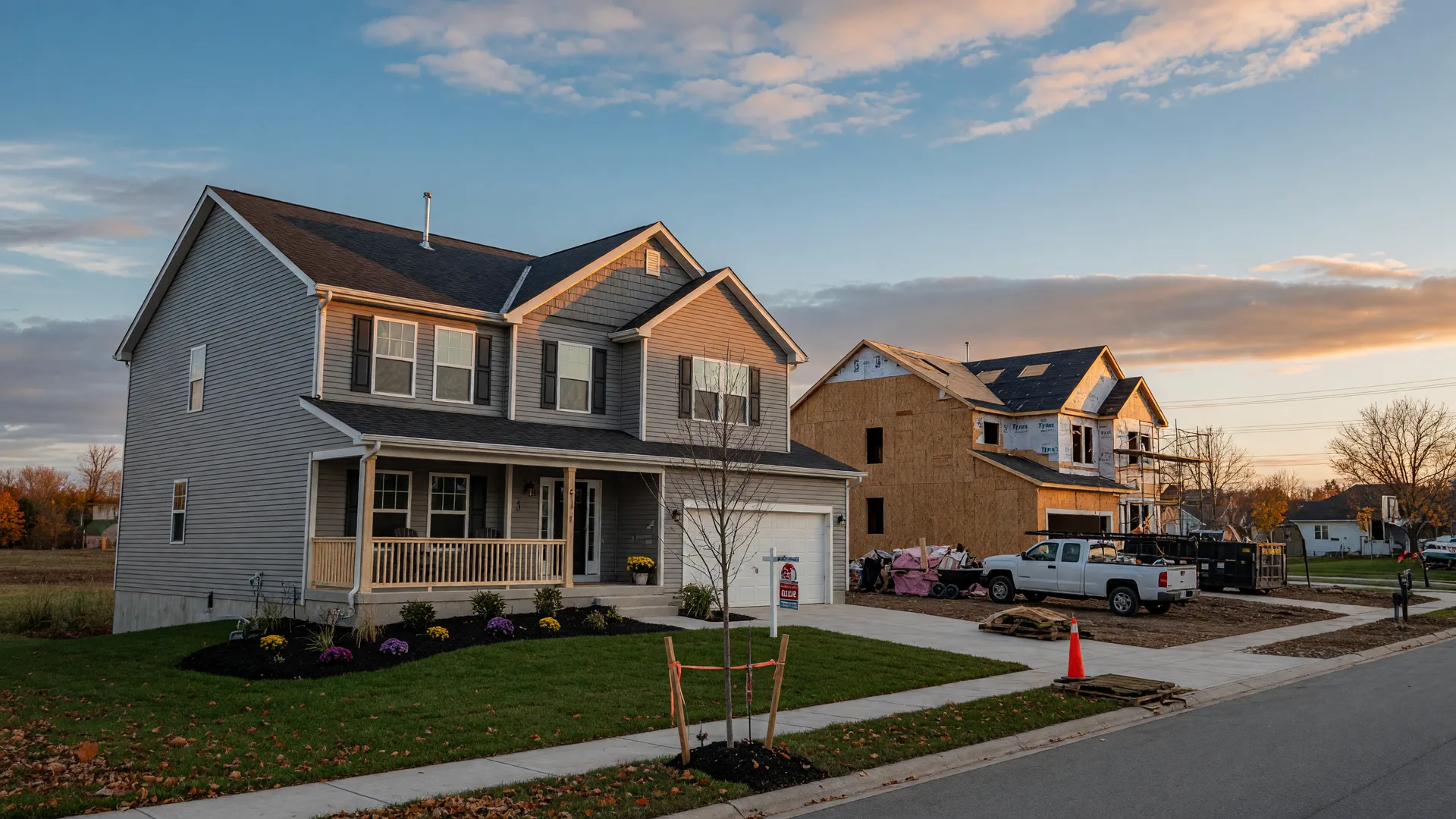
Should your first home be a brand-new build or an established house? I hear this question from buyers in Crown Point, Valparaiso, Lowell, and everywhere in between, and the honest answer is that both paths can lead to a wonderful first home. The right one depends on your timeline, your budget flexibility, and how much control you want over the details. I'm Holly Brumm Furdo, the Northwest Indiana REALTOR® behind My First Home NWI, I guide both new-construction and resale buyers, and this is the comparison I walk through in real conversations every week.
Start with the question that decides most of it: time
If you need a house by a hard date, that answer usually settles the debate. Buying an existing home in Northwest Indiana typically runs 30 to 45 days from accepted offer to closing when things go smoothly. A new build runs on a different calendar entirely: from contract to keys, plan on roughly six to nine months, and sometimes longer, because the house has to be built before you can move into it.
Northwest Indiana weather is part of that math. Crews work through winter where they can, but concrete, roofing, and drywall have their seasons, and a house that breaks ground in November often slides its closing into spring. A spring or early-summer start usually lands you at the closing table before the holidays. Builders give you an estimated completion date, and you should treat it as an estimate, not a promise, which is why I always tell buyers to build a little flexibility into their timeline.
What you get for your money: new vs. existing
With new construction you buy exactly what you choose: the floor plan, the finishes, the cabinet color, the lot. The tradeoff is that the advertised base price is rarely the final number. Lots, upgrades, landscaping, window treatments, and sometimes even appliances can be priced separately, so the headline price and the turnkey price are two different numbers. Play with what a slightly bigger budget means month to month in my home affordability calculator before you set your expectations.
With an existing home you buy a house with its history already built in: the mature trees, the settled sidewalks, the finished basement someone else already paid for. The price per square foot is often lower than a comparable new build, and sellers usually have room to negotiate, because every extra day on market costs them something.
- New construction: you make the choices, you wait for them, and you pay for upgrades on top of the base price. The good news is that Indiana's IHCDA down payment assistance, programs like First Step and Next Home, applies to newly constructed homes as well as existing ones. Current details live on the IHCDA homebuyer programs page.
- Existing home: you can move in quickly, you get established character and usually more negotiating room, but you inherit whatever the previous owners left behind, which is exactly what your home inspection is for.
The warranty difference is bigger than buyers expect
Here is where a new build genuinely shines. Indiana law gives buyers of newly constructed homes a statutory written warranty from the builder: defects in workmanship and materials are covered for two years, and major structural defects for ten. That is real, meaningful protection, and it is part of why new construction feels safe to a lot of first-time buyers. The details are in the Indiana code if you want the fine print.
Existing homes do not come with a builder warranty. You get the seller's disclosure, your own inspection, and whatever protection you negotiate, which for a well-maintained home is plenty. It is just worth knowing where the protection lives, and it is one more reason a good inspection matters so much on a resale. The Consumer Financial Protection Bureau's owning-a-home tools are a helpful free primer on the steps that protect you along the way.
Where new construction actually is in Northwest Indiana
Here is what I see from the ground, which is one of the genuinely fun parts of this job. In Lake County the busiest new-home neighborhoods are around Crown Point, St. John, and Schererville, with fresh subdivisions near Cedar Lake and Lowell as farmland gives way to curbs and driveways. Porter County's growth is heating up around Valparaiso, and Chesterton sees its share of infill and expansion too. Farther south, Wheatfield and DeMotte are where buyers go for genuinely affordable new builds on bigger lots.
The new South Shore Line Monon Corridor stations around Munster and Dyer have also made that corridor more interesting to commuters, and builders pay attention to the same commute math buyers do.
What first-time buyers should watch for in a new build
- Base price versus real price. Keep a separate budget line for upgrades, the lot premium, landscaping, and window treatments, and ask for the total with standard finishes before you fall in love with the model home.
- The builder's preferred lender. Builders often sweeten the deal with incentives through an affiliated lender, and that can be a genuinely good offer. You are not required to use them, so compare the full picture and let your own lender run your numbers too.
- Property taxes on a brand-new home. The assessed value is set on the new house, not whatever was there before, so first-year tax estimates are genuinely estimates. Your lender and the county assessor can show you the real range before you commit.
- Your own inspection still matters. A brand-new house deserves an independent inspection just like a resale does, on top of the builder walkthrough and punch list.
- The contract reads differently. Builder contracts are carefully written in the builder's favor, which is common and normal, but your agent should translate what the timeline, deposit, and cancellation terms actually mean for you before you sign.
A reality check from Holly
A lot of first-time buyers assume new construction is out of reach, and sometimes it is. But Indiana's down payment assistance works on new builds too, and builders run incentives that can compete with resale pricing. Programs, income limits, and incentives change, so verify the current terms with a qualified mortgage lender or with IHCDA before you plan your budget around them.
New build or existing home: which one is yours?
Here is my honest framework. Pick new construction if you have the time to wait, you want to control the finishes, and you like the idea of a builder warranty from day one. Pick an existing home if you want to move in soon, you love established trees and settled neighborhoods, and you enjoy the idea of a good negotiation.
Neither choice makes you a smarter buyer. Buying well means understanding what you are signing, staying patient with the timeline, and working with people who explain things in plain English. That last part is the part I'm best at, and it is exactly where I can help, whichever road you take.
If you are weighing a new build against existing homes in Northwest Indiana, let's talk it through. I'll walk you through the neighborhoods, connect you with a lender who knows Indiana programs, and we will map out the path that actually fits your life, with zero pressure and zero judgment. Your first house is closer than you think, on either side of that debate.
Written by
Holly Brumm Furdo
Northwest Indiana REALTOR® • My First Home NWI
Holly specializes in first-time buyers but is a full-service residential REALTOR® who also represents sellers, growing and move-up families, relocation buyers, new-construction buyers, and downsizers across Lake, Porter, and Newton Counties. My First Home NWI is her first-time homebuyer resource, and she'd love to help you with wherever you are in the process.
Your next step
Curious which town fits you? Let's talk about it.
I've helped plenty of Chicago-area buyers find their first home in Northwest Indiana, and our first conversation is free, friendly, and completely obligation-free. You tell me where you are, I tell you what comes next, and we both leave a little more excited.
More from the blog
All posts
Relocation
Moving from Chicago to Northwest Indiana: What First-Time Buyers Should Know
The honest commute math, the towns worth a first look, and how buying in Indiana is different for Chicago-area first-time buyers.
Buyer Programs
Indiana First-Time Homebuyer Programs: Down Payment Assistance, Explained in Plain English
Indiana's IHCDA runs down payment assistance and first-time buyer programs that can help. Here's how they work, who they're for, and how to start.
Condos
Buying a condo? Two questions to answer early.
Will your preapproval work for this building, and what's really going on with the association? Two questions to ask early when you buy a condo.
Closing Costs
How Much Are Closing Costs for a First-Time Buyer in Indiana?
Plan for roughly 2% to 5% of the purchase price on top of your down payment. Here's what is inside that number and how to budget for it.

Credit & Pre-Approval
What Credit Score Do You Need to Buy a First Home in Indiana?
The honest score ranges, what lenders actually look at, and how to spend the months before buying improving your file.
Credit & Pre-Approval
Mortgage Pre-Approval, Explained: A First-Time Buyer's Guide for Northwest Indiana
Pre-approval is the lender's letter that turns 'someday' into a plan. What it is, what your lender asks for, and why it belongs before the house hunt.
Communities
Which Northwest Indiana Town Is Right for You? A First-Time Buyer's Guide to Lake, Porter, and Newton Counties
Crown Point's brick square, Munster's new train station, Valparaiso's college town, Chesterton's dunes, Kentland's farm country. How to pick the NW Indiana town that fits your life.

Down Payments
How Much Do You Really Need for a Down Payment on a First Home in Indiana?
Hint: it's not 20%. The real minimums, what they look like in Northwest Indiana dollars, and how IHCDA assistance can shrink the number further.
Buying Process
What a Home Inspection Covers (and Costs) in Indiana: A First-Time Buyer's Guide
Indiana home inspections typically run $300 to $500. Here's what a licensed inspector checks, what it doesn't cover, and the local things NWI first-time buyers should watch for.
First-Time Buyer Basics
Renting vs. Buying in Northwest Indiana: The Honest Math for First-Time Buyers
The honest rent-versus-buy math for first-time buyers across Lake, Porter, and Newton Counties, with real NWI rent numbers and the costs that actually move the decision.
Communities
Buying Your First Home in Newton County, Indiana: What First-Time Buyers Should Know
The honest first-time buyer guide to Newton County: what your money buys, wells and septic, the commute to Chicago, and life in Kentland, Morocco, Brook, and beyond.
Communities
Buying Your First Home in Valparaiso: What Porter County's College Town Is Really Like
The honest first-time buyer guide to Valparaiso: what the Porter County college town is like to live in, how the budget works for first-time buyers, and where to start.

Loan Basics
FHA vs. Conventional Loans for a First-Time Buyer in Indiana: Which One Fits You?
The honest difference between FHA and conventional loans, what each really costs over time, and how the choice plays out across Northwest Indiana towns.

Communities
Buying Your First Home in Crown Point: What Northwest Indiana First-Time Buyers Should Know
The walkable square, the strong schools, the commute to Chicago, and the honest picture of what a first home in Crown Point actually involves.
Buying Process
Making Your First Offer in Northwest Indiana: Earnest Money, Appraisals, and Contingencies
You found the house and you're pre-approved. Here's what earnest money, contingencies, and appraisals actually do when you make your first offer.